 Skip to main content
What is a moval?
What Is a Moval Cut Diamond?
A moval cut diamond is a hybrid shape that combines the elongated body of a marquise with the soft, rounded ends of an oval. The name is a portmanteau of "marquise" and "oval," and the result is a longer, narrower silhouette than a standard oval, with gently tapered ends instead of sharp points. It's one of the rarest fancy shapes on the market and one of the fastest-growing search terms in fine jewelry right now.
A moval cut diamond takes the tapered, elongated outline of a marquise and softens its sharp points into gentle curves, similar to an oval's rounded ends. The result sits visually between the two parent shapes: longer and narrower than a typical oval, but without the pointed tips that define a marquise.
Because moval isn't a standardized cut the way round or princess are, there's no single fixed facet count or proportion range set by GIA or any other grading body. Each moval is essentially custom-cut, shaped from the rough diamond to maximize the elongated silhouette while preserving brilliant-cut light performance. That means two moval diamonds can look meaningfully different from each other even at the same carat weight — evaluating the actual stone matters more here than with most other shapes.
The shape has gained visibility recently through boutique and direct-to-consumer jewelers offering it as a signature or house-exclusive cut, since its rarity and hybrid identity make it a natural fit for brands looking to stand apart from mainstream oval and marquise offerings.
Moval Diamond Length-to-Width Ratio: What's Best?
L/W Ratio | Look | Best For |
Below 1.75 | Closer to a standard oval, less distinct taper | Buyers who want subtle moval character without a dramatic shape |
1.75–2.10 | Balanced moval silhouette | The most common sweet spot — clearly elongated with soft, defined ends |
Above 2.10 | Very narrow, dramatic, marquise-like | A bold statement look, but a higher chance of a pronounced bow-tie effect |
A standard oval typically sits in the 1.30–1.50 ratio range. A moval usually starts where oval leaves off, making the 1.75–2.10 window the range that reads as a true moval rather than just a longer oval.
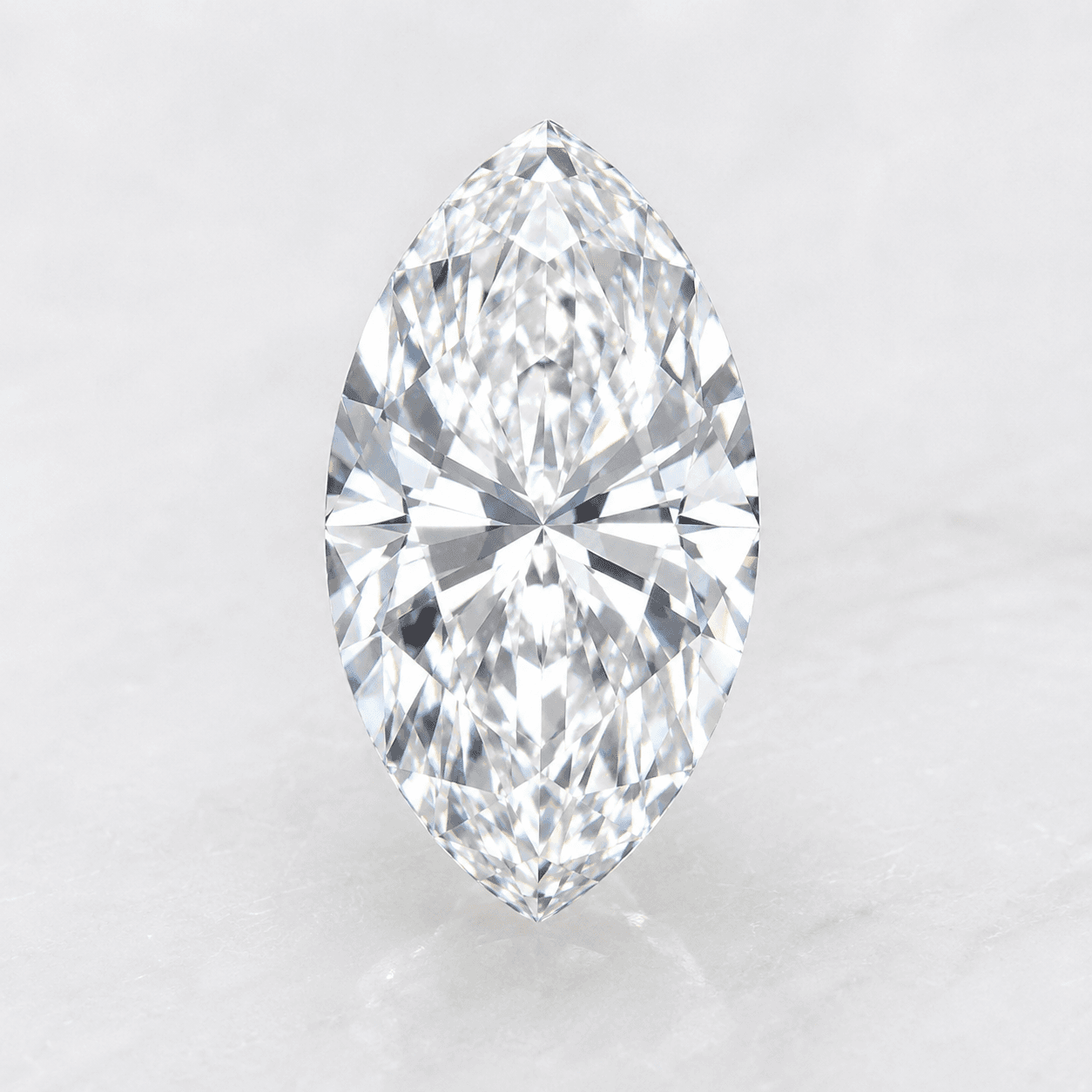
Clarity and Color for a Moval Cut Diamond
Because a moval shares its brilliant faceting and open table with the oval and marquise, the same general clarity guidance applies: VS2 or SI1 clarity is typically eye-clean and a practical target for most buyers. Where to check for inclusions depends on the individual stone's proportions — movals with a more oval-like body tend to hide inclusions near the girdle the way ovals do, while movals cut with a sharper taper can show inclusions near the tapered ends the way a marquise does.
G–H color is a safe target range, consistent with other elongated shapes, since the tapered ends can concentrate visible tint the same way an oval's or marquise's points do.
Because moval isn't standardized, always request a video of the specific stone rather than relying on the certificate alone — proportions and light performance vary more from stone to stone than they would with a shape like round or oval.
Bow-Tie Effect in a Moval Diamond
Like every elongated brilliant cut, a moval can show a bow-tie effect — a shadow across the center of the stone caused by the viewer's own head and shoulders blocking light. Whether it's present, and how visible it is, depends entirely on the individual cut, since there's no standardized proportion set to check it against.
Use the same checklist that applies to oval and marquise shapes:
Watch the stone on video, not a static photo
, so you can see how the bow-tie shifts as the stone moves.
Check symmetry between the two tapered ends
— they should mirror each other closely.
Be more cautious at ratios above 2.10
, where the shape leans closer to marquise and bow-tie risk increases.
Compare a few individual stones
rather than assuming one moval will look like another, since cut proportions vary more here than with standardized shapes.
Moval vs. Oval vs. Marquise: How They Compare
Factor | Moval | Oval | Marquise |
Ends | Softly tapered, rounded points | Fully rounded, no taper | Sharp points |
Typical L/W ratio | 1.75–2.10 | 1.30–1.50 | 1.75–2.00 |
Standardization | Non-standardized, custom-cut | Standardized proportions | Non-standardized, but well-established |
Chip risk | Low — no sharp points | Lowest — fully rounded | Higher — pointed tips need protection |
Market availability | Rare, often made-to-order | Widely available | Available, less common than oval |
Overall look | Elongated and distinctive | Classic, balanced, versatile | Dramatic, vintage-leaning |
The simplest way to think about it: a moval takes an oval's safety and wearability and stretches it toward marquise proportions, without taking on the marquise's pointed-tip fragility.
Moval Diamond Engagement Ring Settings
Because a moval has no sharp points to protect, setting choice is driven more by style than by durability — a meaningful difference from marquise.
Solitaire prong:
Clean, classic, lets maximum light into the stone
East-west:
Stone set horizontally rather than vertically, a popular modern styling choice for this shape
Bezel:
Full metal rim for a sleek, protective, contemporary look
Three-stone:
Moval center flanked by smaller side stones, adds width and softens the elongated line
Halo:
Smaller diamonds ringing the center stone, boosts brilliance and apparent size
Because the shape draws the eye along its length, a plain solitaire or east-west setting tends to show off the moval's distinctive silhouette better than a heavily embellished setting would.
Frequently Asked Questions
What is a moval diamond?
A moval diamond is a hybrid shape that combines the elongated, tapered body of a marquise cut with the soft, rounded ends of an oval cut. It's longer and narrower than a standard oval but doesn't have the sharp pointed tips of a true marquise.
What is the best length-to-width ratio for a moval diamond?
Most buyers look for a ratio between 1.75 and 2.10. Below that range, the shape starts to read more like a standard oval; above it, the shape becomes narrower and more dramatic, closer to a marquise.
Is a moval diamond the same as an oval diamond?
No. An oval diamond has a fully rounded, even elliptical outline with a typical ratio of 1.30 to 1.50. A moval is longer and narrower, with ends that taper before rounding off, giving it a more elongated and distinctive silhouette than a standard oval.
Does a moval diamond have a bow-tie effect?
It can, like any elongated brilliant cut. The risk increases at longer, narrower ratios, similar to marquise and oval shapes. Because moval proportions aren't standardized, checking an actual video of the specific stone matters more than it would for a shape like round or oval.
Why is the moval cut so rare?
Because it isn't a standardized shape, moval diamonds are typically cut individually rather than mass-produced to a fixed proportion spec. Many pieces are made-to-order or offered as a signature cut by specific jewelers rather than stocked broadly across the market.
Choosing Your Moval Diamond
A moval rewards buyers who want an elongated shape with more personality than a standard oval, without taking on the pointed-tip fragility of a marquise. Because it's non-standardized, the individual stone matters more than the shape name — a ratio in the 1.75–2.10 range, clarity checked against that specific stone's proportions, and a video review before buying will get you a moval that actually delivers the look.
Send us an inquiry for certified moval diamonds at Desert Wholesale Diamond and see the full 4Cs breakdown, video, and wholesale price on every diamond before you buy.